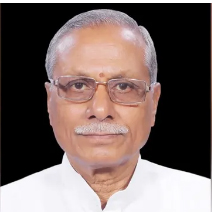
As a seasoned politician succeeds a distinguished soldier, the hills look towards a new chapter of constitutional leadership.
 By Jay Prakash Pandey ‘Pahadi’
In the hills of Uttarakhand, an examination can begin long before the invigilator says “start”. A student may have travelled overnight to reach the centre, paid for a room she can scarcely afford, and then found herself facing a computer she has rarely used. The question paper may be the same for everyone. The preparation for reaching it has not been. Such distances between a village and a college, temporary employment and a secure livelihood, or a government announcement and its arrival on the ground are among the realities awaiting Dr Dhal Singh Bisen, appointed as Uttarakhand’s new Governor on 12 October 2026.
He is set to succeed Lieutenant General Gurmit Singh (Retd), whose distinguished military background shaped his understanding of this sensitive Himalayan state. During his five-year tenure, Singh visited 30 of Uttarakhand’s 51 designated Vibrant Villages. He paid particular attention to former servicemen, women’s empowerment, girls’ education and technology. His initiatives in university administration, including research linked to local needs and greater transparency, deserve continuity. His attention to border villages also pointed towards a larger concern: how to keep these communities inhabited and economically viable.
Bisen brings a different kind of experience. Born in Pipria in Madhya Pradesh’s Seoni district, he studied Ayurveda, practised medicine and remained associated with agriculture. His political journey began at the grassroots, but developed into a substantial career in legislative and administrative office. He was elected to the Madhya Pradesh Assembly from Barghat in 1990, 1993, 1998 and 2003. Between 2003 and 2005, he served as a Cabinet Minister, handling forests, transport, mines, school education and jails. He subsequently chaired the Madhya Pradesh State Finance Commission in 2012–13.
In 2019, he entered the Lok Sabha from Balaghat with 696,102 votes, defeating his nearest rival by 242,066 votes. His parliamentary responsibilities included committees dealing with education, health, science, environment and forests. According to PRS Legislative Research, he recorded 99 per cent attendance, participated in 73 debates and asked 189 questions during the seventeenth Lok Sabha.
His career has taken him through constituency politics, ministerial responsibility, public finance and Parliament. His appointment by President Droupadi Murmu brings to Lok Bhavan someone familiar with how policy is debated, administered and experienced by ordinary citizens.
Yet politics and the governorship demand different judgments. An elected representative can press demands openly; a Governor must act within constitutional limits. Under Article 163, he ordinarily functions on the aid and advice of the Council of Ministers. Article 167 enables him to seek information from the Chief Minister concerning state administration and proposed legislation. His experience in public life will be useful in maintaining informed dialogue with the state government and, through appropriate channels, with Union authorities. The success of that relationship will depend on constitutional restraint as much as personal experience.
In higher education, the geographical imbalance is difficult to overlook. Garhwal has Hemvati Nandan Bahuguna Garhwal University, which acquired Central University status in 2009. Kumaon has no corresponding Central University. The demand for one in the Kumaon region deserves serious consideration, particularly when the geography of the hills makes access to nationally funded higher education difficult for many families.
Legal education presents another long-unresolved question. Uttarakhand enacted the National Law University Act in 2011, originally identifying Bhowali in Nainital district as its location. The proposed headquarters subsequently shifted to Ranipokhari in Dehradun district. Yet the university remained non-operational as reported in 2026. The state has functioning law colleges and departments, but the National Law University promised fifteen years ago has still not begun teaching students. The mountain districts have no such dedicated institution. Under the Act, its Chancellor is the Chief Justice of the Uttarakhand High Court, rather than the Governor. Even so, the prolonged delay deserves attention from the state’s constitutional leadership.
For many students, the more immediate difficulty begins before admission. Competitive examinations increasingly use computers, while opportunities to practise on them remain uneven. An unreliable connection, limited access to devices and examination centres far from home can place mountain students at a disadvantage. The Union government reported mobile connectivity in 684 of Uttarakhand’s 705 identified border villages in March 2026. That represents considerable progress. But mobile coverage alone cannot guarantee dependable broadband, computer access or digital confidence.
National examination bodies and governments need to address these practical inequalities. Bisen’s experience in education and his years in Parliament should make him familiar with the administrative and financial decisions involved. The constitutional office cannot determine examination-centre locations, but it can help ensure that the difficulties of the hills are properly communicated to those who do.
Medical education deserves similar attention. Uttarakhand has expanded its network of government medical colleges, including institutions in Almora and Haridwar. Yet competition for affordable medical seats remains intense, while specialist healthcare in remote districts continues to pose difficulties. Increasing government medical seats must go together with qualified faculty, teaching hospitals and incentives for doctors to serve mountain communities.
For contractual and outsourced workers, the uncertainty is different. Employees performing comparable duties may receive markedly different wages, and some have worked for ten years or longer without dependable employment security. Any consideration of regularisation must comply with the law, but years of service deserve a fair examination under transparent rules. In September 2026, Gurmit Singh sought information on the regularisation of UPNL personnel and the implementation of equal pay for equal work. The change of Governor should not interrupt attention to these unresolved concerns.
Bisen’s former parliamentary constituency includes Rampayli, known for its Shri Ram Balaji temple and a local tradition linking it to Lord Rama’s exile. Uttarakhand’s pilgrimage landscape will therefore offer a familiar cultural connection, though its scale and challenges are markedly different. Along the Char Dham routes, improving facilities must go hand in hand with protecting local livelihoods and fragile mountain environments. Pilgrimage is more than a commercial tourism activity; planning must respect its spiritual character while addressing the needs of pilgrims and the communities that receive them.
His administrative experience with forests may also prove relevant in a state where conservation, livelihoods and development frequently meet in difficult circumstances. Law and order, fair recruitment and public safety, meanwhile, remain the responsibilities of the elected government. The Governor’s role is to remain informed and uphold constitutional propriety, without becoming involved in operational decisions.
The transition from Gurmit Singh to Dhal Singh Bisen brings together two different traditions of public service. One came from the Army, with an understanding of borders and national security. The other arrives after decades in elected politics, government and Parliament. Uttarakhand has reason to expect continuity in the useful work already undertaken and a wider conversation on the problems its people face.
A student who can sit an examination near home, a village that keeps its families, an institution that finally opens its doors: these may be more modest measures of a Governor’s public influence than a grand speech. They are also how people in the hills will judge whether anyone has been listening.
(Jay Prakash Pandey ‘Pahadi’ is a Social Activist, Independent Writer, Poet & Columnist.)