Garhwal Post Bureau
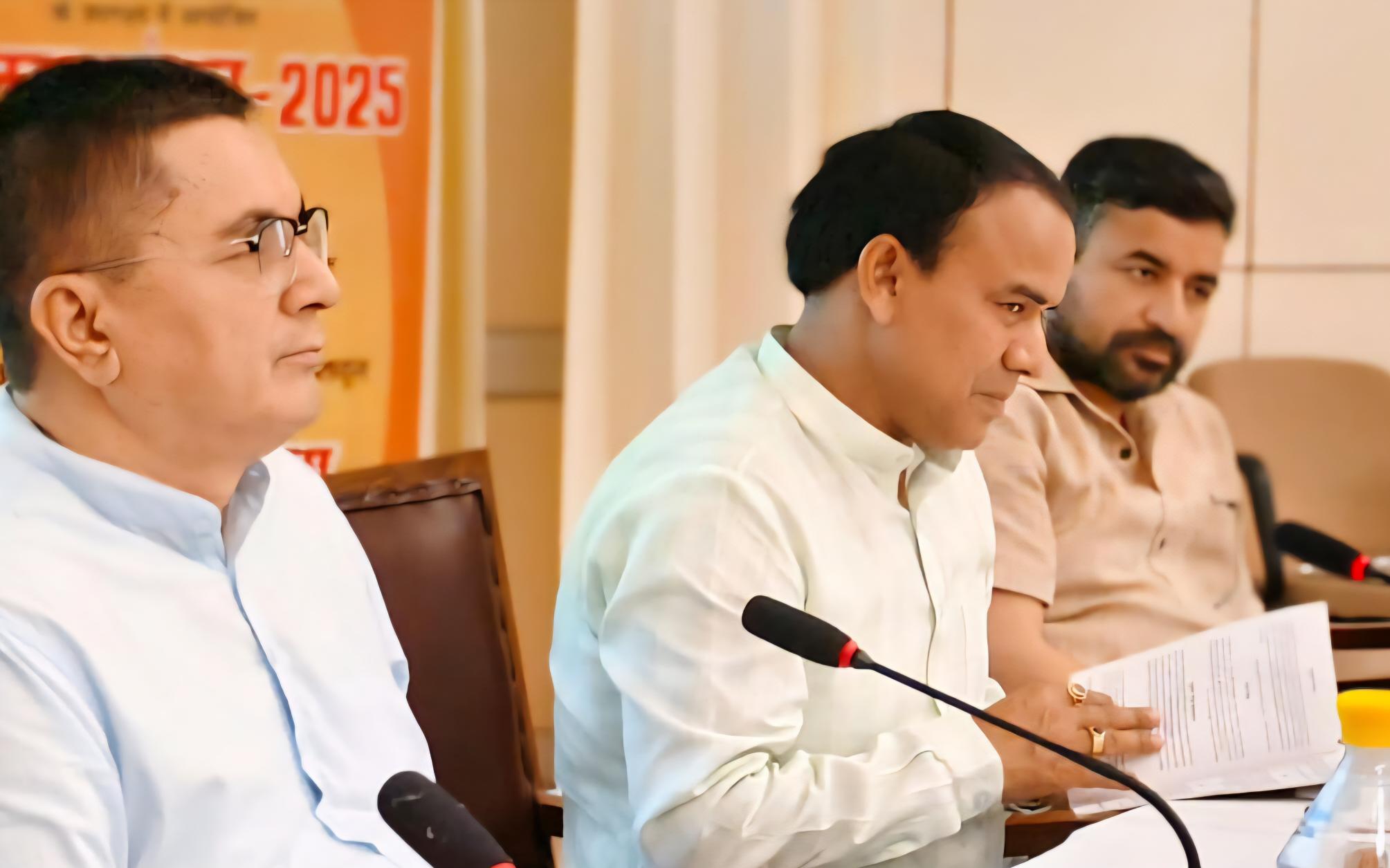
Dehradun, 9 Jul: The two-day workshop “Sahkar Manthan-2025”, organised by the Uttarakhand Department of Cooperation, concluded today at the auditorium of the Forest Research Institute (FRI), here. The final day witnessed in-depth discussions on necessary amendments to cooperative laws and regulations, with a focus on making the cooperative system more future-ready and transparent.
In his keynote address, Minister of Cooperation Dr Dhan Singh Rawat emphasised that the cooperative movement in Uttarakhand is evolving beyond banking into a broader socio-economic movement, calling for transparency, use of technology, and local participation.
There are 670 Primary Agriculture Credit Societies (PACS) in the state with 11 lakh registered members. Ten District Cooperative Banks and 1 State Cooperative Bank serve 19 lakh account holders. Approximately 30 lakh citizens, about 35% of the state’s population, are engaged in the cooperative sector.
The key reform highlights were that, by 31 December 2025, under the “Cooperative Drive”, 1 lakh new members would be added, and 1 lakh new bank accounts opened. It was asserted that promotion and transfers will now be performance-based. A formal transfer policy is being implemented in cooperative banks. Instructions were issued on reforming the working style across institutions.
Dr Rawat revealed that, out of 6,500 cooperative committees in the state, around 1,500 are inactive. These will be phased out or restructured. From 24 July, a Corrective Inspection Campaign will begin in Haridwar, and after the Model Code of Conduct, the campaign will be expanded to other districts. Registrars, Joint Registrars, and Assistant Registrars will inspect cooperatives for 7 days every month in a phased manner. For the first time, 350 secretaries will be recruited through a written examination. The draft process is to be finalised within one week.
Dr Rawat announced that Uttarakhand will soon implement five new cooperative models: Medical Cooperatives – the goal being affordable and accessible healthcare in urban and rural areas. Services of hospitals, pharmacies, labs, insurance would be provided. The benefits would be decentralised healthcare employment and services. Youth Cooperatives will connect youth with startup-cooperative models. The Focus Areas would be agritech, e-commerce, dairy, IT. The benefits would be innovation, self-reliance, tech inclusion. Forest Cooperatives will empower tribal and forest communities. The work areas would be collection, processing, and marketing of minor forest produce, providing benefits such as environmental protection and forest rights implementation
Also, Tourism Cooperatives would promote rural tourism via local youth who would provide services such as homestays, folk art, guide services. The benefits would be employment, reverse migration and cultural preservation. There will also be Multinational Fisheries Cooperatives, that would establish a globally competitive cooperative model in fisheries
Dr Rawat’s also stated, “It depends on how we view a half-filled glass – as disappointment or as opportunity. The cooperative sector holds immense potential. What we need is willpower and execution.”
Dr. Rawat also announced that a one-day cooperative dialogue will soon be held with former district cooperative bank presidents, top cooperative society leaders, and other stakeholders. He directed full preparedness for the upcoming Cooperative Fairs starting in September and called upon all officials and staff to widely publicise the cooperative movement.
In the concluding session, six expert groups deliberated on Digital Transformation, green development, state cooperative strength, and being consumer-centric.