By AMEESHA DAS NATHANIEL
Dehradun, 8 Jan: Karan Madhok captivated readers and literary enthusiasts at the English Book Depot here, today, during an insightful book signing event for his latest work, ‘Ananda: An Exploration of Cannabis in India’. The event attracted a diverse crowd eager to learn more about the intriguing themes of his book.
Derived from Sanskrit, the word Ananda signifies “bliss” or “happiness” and is often associated with the pursuit of spiritual enlightenment. Madhok’s book delves into the historical, cultural, and spiritual significance of cannabis in India. It refers to India’s earliest written texts and myths about Cannabis, offering readers a fresh perspective on an often-misunderstood subject. With a blend of meticulous research and engaging storytelling, Madhok explores how cannabis has been woven into the fabric of Indian society for centuries, touching upon its ancient use in rituals and its modern socio-political context. In his book he writes about his journey and encounters with different people associated with Cannabis.
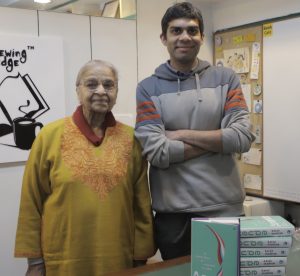
Madhok.
During his talk, Madhok highlighted the inspiration behind the book, emphasising the deep connection between Ananda, and Anandamide (ANA) a neurotransmitter in our brain responsible for physiological processes in our body such as appetite, mood, pain, sensation, etc. Its name is derived from the same Sanskrit word. He explained how THC, one of the main compounds found in cannabis responsible for giving the feeling of high or Anand, has the same structure as Anandamide and can stimulate one in the same manner, and hence give one the feeling of High or Anand. He further expands on his exploration of cannabis as both a medicinal and spiritual substance in India with roots in ancient traditions, where it was often revered as a tool for achieving higher states of consciousness, highlighting how remarkable India has been in discovering the uses of Cannabis. He goes on to stress on the fact that India being one of the largest producers and having such a vast history and relation with Cannabis traditionally, it is important for India to not be left behind other countries, i.e., Canada, China, which have been utilising Cannabis to produce medicines, manufacture fabrics, etc., and have been establishing a full blooming industry out of the Cannabis plant, hence, emphasising also on destigmatising the plant which has been an essential part of India.
Attendees were visibly engrossed as Madhok shared anecdotes from his writing process and discussed the complexities surrounding the plant’s modern perception in India.
The session concluded with an interactive Q&A, where readers posed thoughtful questions about the cultural evolution of cannabis and its relevance in contemporary society.
Madhok’s engaging presentation and thought-provoking narrative left a lasting impression on the audience. Many lined up to get their copies signed, expressing appreciation for the author’s unique perspective on an ancient yet timely topic.