Garhwal Post Bureau
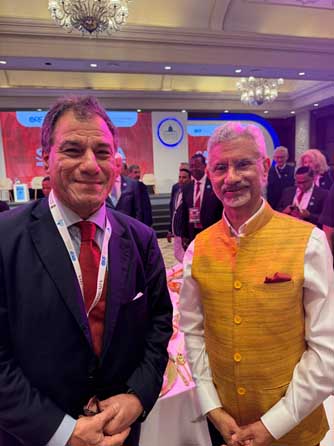
New Delhi, 7 Mar: Lord Karan Bilimoria, CBE DL, Crossbench Peer in the House of Lords, Founder of Cobra Beer, and Chairman of the International Chamber of Commerce, United Kingdom, participated on Friday in the Raisina Dialogue, the Indian Government’s flagship conference on geopolitics and geoeconomics, held in New Delhi.
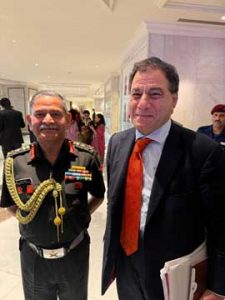
The annual Raisina Dialogue is organised by India’s Ministry of External Affairs in partnership with the Observer Research Foundation, an independent global think tank. The conference was inaugurated by the Prime Minister of India, Narendra Modi, alongside the Chief Guest, the President of Finland, Alexander Stubb. Attending were global leaders, ministers, policymakers, business leaders, and thought leaders to debate the most pressing international challenges, including the Union Minister for External Affairs S Jaishankar, and the Indian Chief of Army Staff, General Upendra Dwivedi, underlining its importance as one of the world’s leading platforms for strategic dialogue.

Lord Bilimoria spoke at Raisina on the topic of “Migration, Mobility, and Integration”, which explored how migration is reshaping societies and politics across the developed world.
His speech examined how the West is increasingly being influenced not only by economic competition and security threats, but also by demographic shifts and cultural anxieties linked to migration and mobility. Across many developed nations, political landscapes are being transformed by debates surrounding immigration and integration.

The session Lord Bilimoria took part in considered the global drivers of migration — including conflict, inequality, and climate change — which often lie beyond the control of any single nation. At the same time, electorates continue to expect governments to maintain strong and effective immigration policies.
Participants addressed the challenges that arise when migration flows outpace the capacity of states to integrate newcomers into existing societies, when the skill profiles of migrants do not match the economic needs of host countries, and when immigration becomes a polarising issue in domestic politics.