By OUR STAFF REPORTER
Dehradun, 22 Jun: The National Conference on ‘Living With Nature’ (LNSWSEC-2024), organised by the Indian Association of Soil & Water Conservationists (IASWC) in collaboration with the ICAR-Indian Institute of Soil & Water Conservation (ICAR-IISWC), concluded on 22 June after three days of in-depth sessions and discussions.
Dr CP Reddy, Senior Additional Commissioner of the Department of Land Resources, Government of India, was the Chief Guest. In his address, Dr Reddy emphasised the need for coordinated and renewed watershed management efforts in the current scenarios of resource conservation.
Dr Sangeeta Agasty, Regional Director of INBAR, South Asia Regional Office, Delhi, and Dr Muan Guite, Deputy Advisor of MoRD, Government of India, were Guests of Honour. They expressed their organisations’ commitment to collaborative action for the common cause of resource conservation.
During the Valedictory session, Dr M Madhu, Director of ICAR-IISWC and Chairman of the Organising Committee, highlighted the conference’s success in making conclusive recommendations to various stakeholders involved in resource conservation.
Dr M Muruganandam, Principal Scientist at IISWC, introduced the theme of biodiversity conservation, convening a special session focused on strategies and approaches towards 2050. Lead speakers, including Dr Rakesh Shah (former PCCF, Uttarakhand), Dr Sas Biswas (former Head, Biodiversity Division, ICFRE, Dehradun), Dr Rajesh Kumar (Senior Consultant, FSI), Dr Gaurav Sharma (Head, NRC of ZSI), and Dr SK Singh (NRC of BSI, Dehradun), presented lead lectures on various aspects of biodiversity conservation. The session emphasised the importance of documenting biodiversity, raising awareness among stakeholders, and promoting data-driven conservation strategies, including in situ and ex situ methods.
The session on biodiversity conservation highlighted the need for documenting biodiversity, creation of awareness amongst stakeholders and promotion of data-driven conservation strategies and approaches, including in situ, and ex situ conservation following principles of ecosystems. Dr Muruganandam expressed the concern for establishing comprehensive People Biodiversity Register (PBR) by the Biodiversity Management Committee (BMC) constituted at local Panchayat level under the umbrella of State Biodiversity Boards (SBB) and National Biodiversity Authority (NBA), Chennai and with the provisions of Biological Diversity Act, 2002.
Dr Rakesh Shah expressed means of biodiversity conservation and emphasised the need for a committed fund for the purpose. Citing threats, Dr Sas Biswas called for concerted efforts to maintain ecological harmony. Rajesh Kumar spoke on the data normalisation and harmonisation in order to establish not only forest cover but also forest types, which indicate kind of species present and their conservation needs. Dr Gaurav Sharma and Dr SK Singh spoke on plants’ and animals’ diversity, their interdependence and the needs of conservation.
Earlier, in a session on society, policy and governance was held, wherein Dr A Arunachalam, Director, ICAR-CAFRI, Jhansi, Dr P Raja, Principal Scientist, RC, IISWC, Koraput, Dr Suresh Kumar, Sr Scientist, ICAR-CSSRI, Karnal and Dr TM Kiran, Scientist, ICAR-NAIP, New Delhi presented lead papers on tree-based solutions to environment problems, carbon management to tackle climate change, valuation of ecosystems services, and economic valuation of ecosystem services, respectively.
A session on International Bamboo and Rattan Organisation (INBAR) on the use of bamboo as resource for conservation, rehabilitation and livelihoods, was convened by Tom Okello Obong, Executive Director, National Forestry Authority, Uganda, and Dr Sangeeta Agasty.
The last day featured over 35 presentations and 40 posters, showcasing a wide range of research and insights into soil and water conservation, biodiversity conservation, and the economic and ecological evaluation of ecosystem services. Experts underscored the importance of collaborative efforts in promoting sustainable practices that benefit both nature and livelihoods.
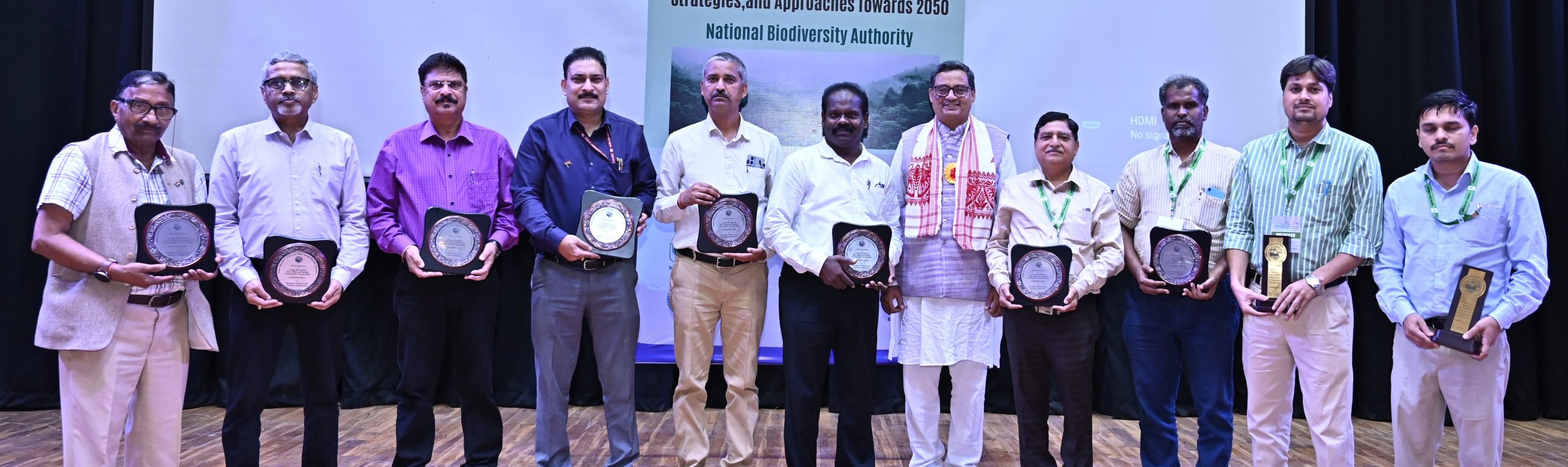
In the valedictory function, awards and prizes for the best presenters, stalls, and posters were distributed by dignitaries. Participants expressed their appreciation for the organisers, especially, Organising Secretaries Dr SS Shrimali, Dr Rajesh Kaushal and Dr Trisha Roy and the conference’s success in addressing its full agenda.
The conference highlighted and recommended the flowing points
- Unified National Dataset:
- A collaborative platform involving ICAR, ISRO, GSI, and FSI is essential to unify data on natural resource inventories and land degradation assessments. ICAR could host this platform, while ISRO could manage data access using its expertise. Strengthening existing platforms like Bhuvan and Bhunidhi to host periodic data and maps is recommended. A policy for the regulated adoption of high-resolution data generated by other institutes would be advantageous.
- Next-Generation Watershed Program:
- Emphasise both surface and groundwater management, including springs, climate change resilience, drought-proofing, and biodiversity conservation. Projected ecosystem services should be included in the Detailed Project Report (DPR) based on realistic assumptions, aided by geospatial tools and environmental models. Valuing ecosystem services before implementation is crucial for environmental protection.
- Agroecological Transition:
- Mainstream existing Integrated Farming System (IFS) models, including natural and regenerative farming, facilitated through credit provision, incentivisation, capacity building, and priority area mapping. This transition can rejuvenate wetlands often degraded by chemical and sediment loads.
- Bamboo and Rattan Utilisation:
- Promote bamboo-based bioengineering measures, bio-fencing, and productive utilisation of degraded land to enhance species diversity conservation, climate change mitigation, and rural economic transformation. Bamboo processing and product manufacturing have the potential to improve gender equity, youth involvement, and social inclusiveness.
- Spring Shed Rejuvenation:
- Collaboration among hydrologists, geologists, environmental specialists, and social mobilisers is needed to develop a comprehensive protocol for spring shed delineation and management, accounting for regional characteristics. Risk assessment before interventions is essential due to the high frequency of landslides in hilly regions.
- Biodiversity Conservation:
- Strengthen biodiversity conservation efforts, focusing on the interplay of different ecosystems (upstream-downstream, upland-lowland, terrestrial-aquatic) within an integrated watershed management plan.
- Capacity Building and Research Support:
- Strengthen institutes with mandates in watershed management and soil and water conservation through additional resource allocation, forming MoUs with key stakeholders, or elevating them to centres of excellence. These steps are vital for implementing and sustaining innovative approaches required for next-generation watershed programmes.