Garhwal Post Bureau
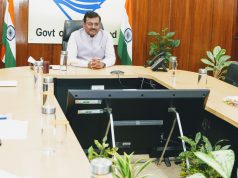
Dehradun, 18 Mar: SETU Aayog (State Institute for Empowering and Transforming Uttarakhand), in collaboration with the Urban Development Department, has reportedly finalised a comprehensive and holistic solid waste management plan for Uttarakhand for the period 2026–2030 under the Swachh Uttarakhand Mission. This initiative aims towards to strengthen solid waste management in the state. In this connection, an expert consultation was organised in Dehradun yesterday, drawing participation from across the country. Representatives from various Himalayan states such as Sikkim and Arunachal Pradesh, along with larger states including Maharashtra, participated in the deliberations. The Keynote address was delivered by Vice Chairman of SETU Aayog, Raj Shekhar Joshi.
The programme also witnessed participation from officials of the Urban Development Department, Uttarakhand, representatives of municipal bodies from Mumbai, industry experts, social organisations, and institutions working on innovative models. The dialogue largely focussed on the new provisions under the SWM Rules 2026, which include four-way segregation of waste, the use of digital technologies, and regulations concerning landfill management. It was shared in the meeting that, at present, Uttarakhand generates approximately 1,900–2,000 tonnes of waste per day. While door-to-door waste collection has improved, there is still considerable scope for enhancement in source segregation and waste processing.
In his keynote address, Raj Sekhar Joshi, Vice Chairman of SETU Aayog, emphasised that to make Uttarakhand truly clean, serious efforts need to be undertaken in a mission mode with a holistic approach. He stressed that the goal should be to eliminate landfills and move towards a zero-landfill framework. He further noted that four key stakeholders are responsible for solid waste management, the State Government, civil society, private companies, and urban local bodies. Efficient utilisation of resources, increased localised processing in hill regions, and enhanced participation of the private sector through urban local bodies and public-private partnership models are essential. The proposed action plan also incorporates provisions for employment generation, along with enhancing the skills and dignity of sanitation workers.
Joshi further emphasised that the use of technology should not be confined to monitoring alone, but must extend to improved planning, effective resource management, strengthening service delivery, and enhancing overall system efficiency. Measures such as digital tracking, GPS-enabled waste collection vehicles, and data-driven decision-making systems are envisaged as part of the proposed action plan.
Besides the keynote address, the programme significantly also featured panel discussions on four major themes, including “Waste to Wealth”, the use of technology, community participation, and monitoring and governance in waste management. Senior officials and advisors from the Urban Development Department and SETU Aayog participated in the discussions, along with representatives from organisations such as Healing Himalayas, Recykel, Feedback Foundation, Waste Warriors, and Him Prahari.