Around the World with the Most Travelled Indian
 By NITIN GAIROLA
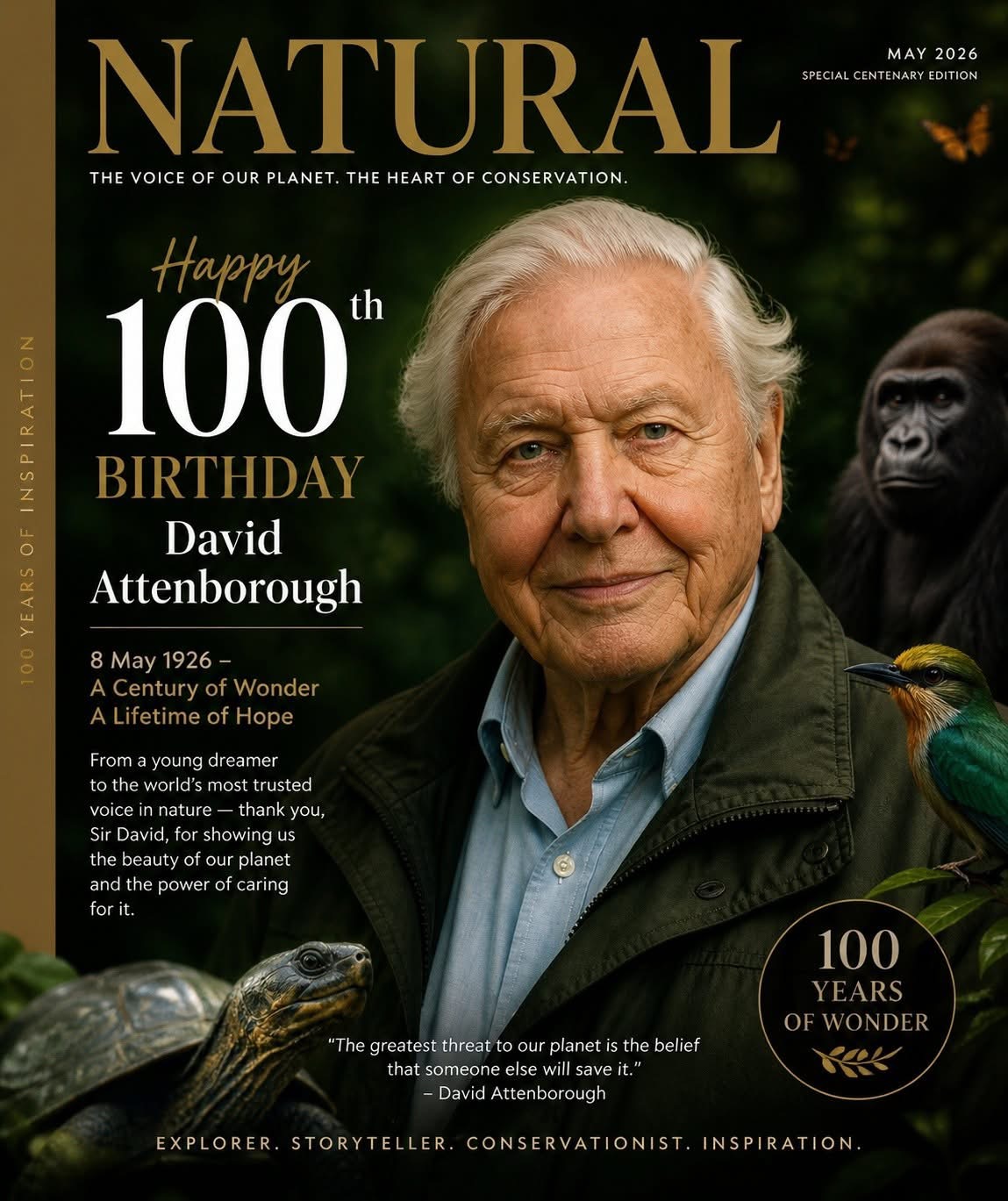
The legendary wildlife film maker, Sir David Attenborough turned 100 recently on the 8th of May 2026. And as most would know, he yet remains the voice of the voiceless wildlife and the voice that is trusted since he has lived through a changing natural world. At a time of noise, he brings in the much-needed calm, wisdom and trust. And the planet that he saw with his own eyes in the 1950s is not the same as the one he sees in the 2020s. We have just lived through the greatest economic era for man and the worst one for all other living beings of the natural world. The very fact that we have lost half of the planet’s forest cover in this short time period of 75 years says it all.
That’s why if there is one person who has brought the natural world into our lives, our homes and our minds, it is David Attenborough. He has been filming in the forests and deserts of the world and now at 100 he’s making some of his finest material that is being seen by millions around the world through Netflix and other OTT streaming platforms.
But as I always ask rhetorically – so what is the natural world? During school, our atlases had maps that were either the political or the physical ones. As all know, the political world had the manmade countries with lines on the land, whereas the physical ones had Earth’s real features and topography, i.e. the features on the land such as mountains, plateaus, plains and the oceans, seas, rivers and lakes. Now, if you notice, the physical map either colour codes topographical elevation (mountains, plateaus and plains) or shows water bodies & their depth (oceans, seas, rivers, lakes, etc.). And while such physical maps do name a few prominent forests, deserts or grasslands (such as the Amazon, Sahara & others), they don’t quite mark their boundaries as we do with country borders, which are so well defined.
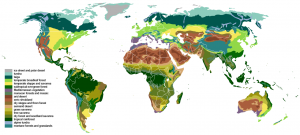
However, our atlases always had a third representation of the world which was not as prominent or detailed as the political or physical world. It was called the map of ‘natural vegetation’ or what we now know of as the ‘Biomes’ or the ‘Living Landscapes of Earth’ (Bio means life). This is the natural cover on top of our real physical surface, and it determines what life exists in a given place. So, for example, the natural cover of forests or deserts or grasslands can be over any physical elevation. You have tropical grasslands in the plains like the African Savannah and the montane grasslands like the Kazak steppe which are at a far greater altitude than the Savannah. But both are grasslands nonetheless and the same can apply to deserts, forest, tundra and ice biomes. Biome types are made through climate types (temperature & precipitation along with soil) and hence this natural vegetation type is not specific to any geography – latitude or altitude. Incidentally, one of the most comprehensive and detailed maps of the natural world that I have is an amazing foldout that I got in a National Geographic magazine which details the major forests, grasslands, deserts and polar ice cover on Earth.
It is this natural world that has been popularised by David Attenborough. You will never see him at a place without life and the natural world is all about our ‘Biosphere’, or the zone where all life exists. It includes all ecosystems on Earth and their interactions with each other and that’s why there is ‘Bio’ in Biomes. Basically, the natural vegetation has life and the ones who depend on the vegetation and the habitats are also living beings. Hence the natural world is the living world.
As I have mentioned many times earlier, if you check Attenborough’s 2019 ‘Our Planet’ masterpiece, you will notice it has episodes named Forests, Jungles, From Deserts to Grasslands, Frozen Worlds, Fresh Water, Coastal Seas and The High Seas. His 2006 Planet Earth documentary also had similar episode names such as From Pole to Pole, Ice Worlds, Deserts, Jungles, Great Plains, Ocean Deep and a few others. The same has been followed in the 2016 Planet Earth II and the 2023 Planet Earth III series as well. It is clearly a reflection of what his understanding of the planet actually is – that fundamentally it is made up of living landscapes and not just the lines on the map that we humans have drawn.
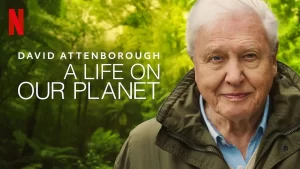
Over his timeframe of 100 years, David Attenborough has seen the natural world change most dramatically as well, and this is reflected in his clear stance towards the risks posed to us and to all wildlife due to man-made climate change and the huge loss of biodiversity that the world is witnessing right now. He, in fact, called his 2020 documentary (A Life on the Planet) a ‘witness statement’ with regard to our treatment of the planet over the past 75 odd years. A witness statement is one that is made by a person who was there to see an event (likely a crime), and that says all there is to say about what has happened so far on Earth.
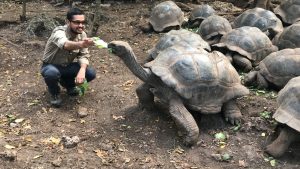
So just as for millions around the world, Sir David Attenborough is my hero as well, given how much I love the natural world. So much so that my life’s biggest project, ‘Borderless Biomes’, is around visiting and documenting the entire natural world itself. At a personal level, I wish to capture (in images & words) the natural world and its diverse wildlife and wild spaces, and see for myself how it has and will change over time. There is no better learning and no better appreciation than through first hand experiences. In the process I hope to keep learning about the natural world and its wonders and hopefully impart my learnings to young and old alike.
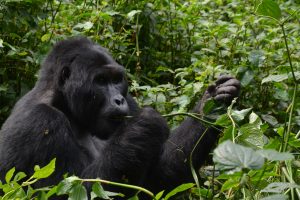
And, somehow, I feel people today are tired of hearing the negative from those like me who are not Earth Science experts – On how the world of the non-human living beings has been destroyed by human beings. That’s why I personally don’t want to carry that narrative since I also know that in many parts of the world a lot of wild spaces have been given back to the wild. And while, in general, mass tourism is bad for the environment but in the case of nature & wildlife, such tourism is definitely good for the wild since then the ‘keystone species’ (such as the popular mega fauna – tigers, lions, rhinos, elephants, gorillas, leopards, etc.) are worth more alive than dead for the locals. You see, the locals don’t care how the money comes in. So, if it comes in when tourists want to see wildlife, then they will show wildlife. It is as simple as that. That’s why I pray more and more people travel the natural world and witness the joys of being one with nature and wildlife. One of the reasons for David Attenborough’s longevity might itself be the pure joy he gets out of the natural world. He once said, “It seems to me that the natural world is the greatest source of excitement; the greatest source of visual beauty; the greatest source of intellectual interest. It is the greatest source of so much in life that makes live worth living.”
(Nitin Gairola is from Dehradun and is often considered the most travelled Indian. Inspired by Sir David Attenborough, he is on a quest to become the first person to travel to & document the entire natural world of every major forest, desert, grassland, tundra & ice biomes on Earth, besides every major country. This multi-year project is called ‘Borderless Biomes’ and besides this, Nitin has set world travel records certified by India Book of Records, has written for Lonely Planet, holds National Geographic conservation certifications and has a weekly feature in Uttarakhand’s Garhwal Post newspaper. He is also a senior corporate executive in an MNC and in his early days, used to be a published poet as well. Join him @ www.instagram.com/ MostTravelledIndian/)