HNBGU Symposium
Garhwal Post Bureau
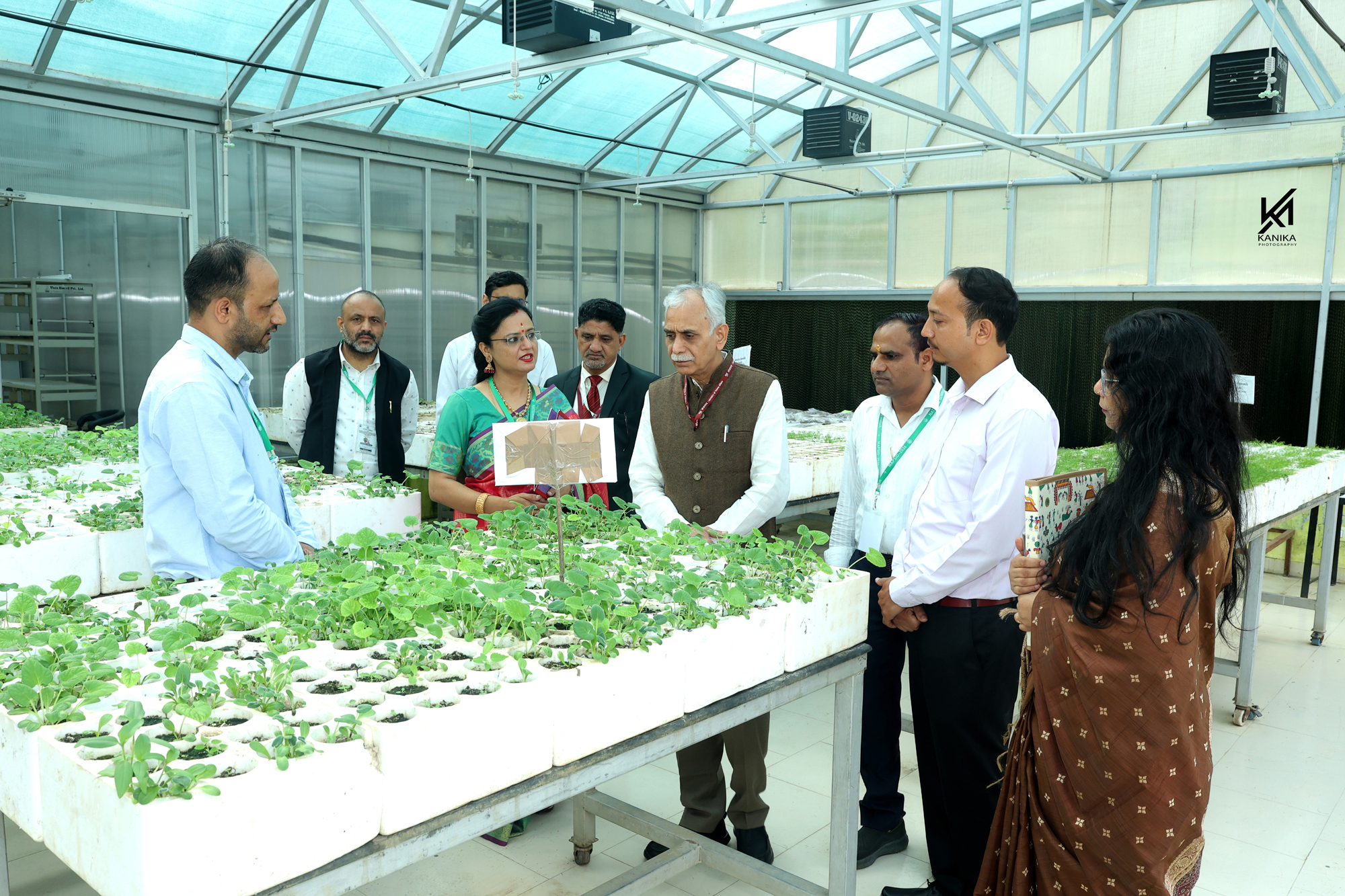
Srinagar (Garhwal), 5 Oct: A two-day national symposium, under the National Medicinal Plants Board project, Government of India, commenced on Monday at the High Altitude Plant Physiology Research Centre of Hemwati Nandan Bahuguna Garhwal University. Experts deliberated on issues related to the Himalayan region’s environmental challenges, changing land use and land cover, climate change, agriculture, medicinal plant resources, and rural livelihoods. Speakers emphasized the need to integrate research into solutions to real-life problems facing local communities and villages, rather than limiting it to academic publications.
Dr. Mahesh K. Dadhich, CEO of the National Medicinal Plants Board, New Delhi, stated that integrating scientific knowledge with practical actions is essential for the development of the medicinal and aromatic plant sector. He described quality planting material, organic and sustainable farming, improved market systems, and youth entrepreneurship as the key pillars of this sector’s development. Dr. Dadhich stated that suitable climate, good soil, quality water, and excellent seeds are crucial factors determining the quality and productivity of medicinal plants. The natural and ecological conditions of the Himalayan region are conducive to the production of high-quality medicinal and aromatic plants. Consequently, this region has the potential to become a major hub for medicinal plant cultivation. He emphasized the need to promote organic and sustainable agricultural practices in the Himalayan region. He emphasized the need to combine traditional knowledge related to cultivation, collection, and processing with a scientific approach to ensure quality production and conservation of natural resources. Dr Dadhich stated that the importance of availability of quality planting material for rare, endangered, and high-value medicinal plants. He added that the availability of authentic and quality planting material is essential for both successful cultivation and conservation of medicinal plants.
He suggested promoting the concept of “One Herb, One District”, saying that a region-specific identity can be developed by selecting medicinal crops suited to the climate, soil, and available resources of each district. This will not only increase farmers’ income but also create local employment opportunities. He also highlighted the usefulness of digital information resources for farmers and entrepreneurs. He encouraged access to information related to farming, technology, and entrepreneurship through available resources, including the website of the National Medicinal Plants Board. He emphasized that before adopting any new medicinal crop or enterprise, its technical and economic feasibility should be assessed so that farmers can make informed decisions.
Dr Dadhich highlighted the need to develop organized herbal markets and dedicated marketing systems for medicinal plants. He said that strong market linkages will provide better yield opportunities for farmers and promote medicinal plant cultivation as an economically viable activity. He urged youth to pursue entrepreneurship in the field of medicinal and aromatic plants, stating that this sector can provide new employment, self-employment, and livelihood opportunities.
Distinguished guest, Professor Mohan Singh Panwar, Dean, Recruitment and Promotion, at Garhwal University, highlighted the geographical and ecological sensitivity of the Himalayas. He stated that the Himalayas are highly vulnerable to natural disasters. Changing land use and land cover, population patterns, and agricultural practices are impacting the traditional agricultural system here. He emphasised the need for timely training and weather-related scientific information to farmers, saying this would enable them to make better decisions regarding crop selection, sowing time, and agricultural practices. He described the increasing adoption of single-cropping instead of traditional mixed farming as a challenge to agricultural diversity and the resilience of Himalayan agriculture. He also cited the lack of quality planting material as a major obstacle to agricultural and horticultural development.
Dr. Arun Kumar Tripathi, Vice Chancellor of Uttarakhand Ayurveda University, Dehradun, said that the healthcare system is now placing greater emphasis on health promotion along with disease treatment. This is increasing the demand for quality medicinal plant raw materials and certified herbal products. He stated that the lack of sufficient and authentic raw materials to meet current demand poses a risk of adulteration and the use of unsuitable alternatives. He emphasized the need for scientific training and technical support to farmers to increase medicinal plant production. He also highlighted the need to promote organic and sustainable farming and develop a coordinated system at various levels, from production to storage, quality testing, and utilization. Dr. Tripathi stated that the quality of medicinal plants is affected by conditions such as the time of collection, geographical location, soil, climate, and processing. Therefore, it is essential to develop scientific and systematic standards for the collection, maintenance, and processing of medicinal plant materials. Present on the occasion were Registrar Prof. Y.P. Raiwani, Dean, Agriculture and Allied Sciences, Prof. R.S. Negi, Dean, Student Welfare, Prof. O.P. Gusain, Director of Birla Campus Prof. H.B.S. Chauhan, Prof. M.M. Semwal, Director of HAPPRC Prof. Vijaykant Purohit, Dr. Babita Patni, Secretary of the seminar Dr. Vijayalakshmi Trivedi, Public Relations Officer Ashutosh Bahuguna and others.